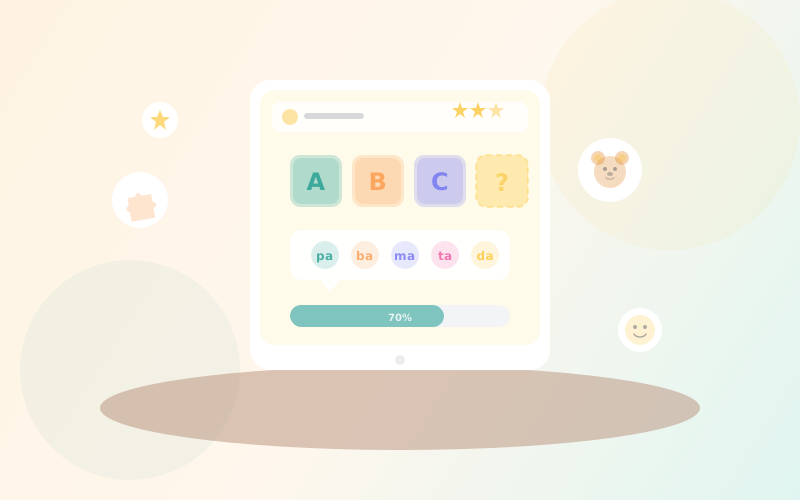
Gamification and Voice AI in Pediatric Speech Therapy
Équipe Cabdivin
Équipe éditoriale Cabdivin
Gamification and Voice AI in Pediatric Speech Therapy
Pediatric speech therapy is undergoing a profound transformation. Traditional methods — paper-and-pencil exercises, mechanical repetitions, classic picture cards — are gradually giving way to innovative approaches leveraging new technologies, gamification, and enhanced parent involvement.
In 2026, speech therapists working with children have access to an enriched and more engaging therapeutic arsenal. Here's an overview of the game-changing approaches.
1. Gamification: When Play Becomes Therapy
Gamification — using game mechanics in a non-gaming context — is arguably the most impactful innovation in pediatric speech therapy in recent years.
Why it works with children:
Children learn naturally through play. Gamification leverages this by integrating progressive rewards, adaptive challenges, immediate feedback, and narrative elements.
Concrete examples:
- Gamified phonological exercises with adventure-style progression
- Phonemic awareness puzzles
- Interactive oral language activities with virtual characters
Cabdivin integrates a library of therapeutic digital games directly into its platform, allowing therapists to assign personalized gamified exercises to each patient.
2. AI-Powered Rehabilitation
AI opens unprecedented possibilities for pediatric speech rehabilitation:
- Real-time voice analysis: algorithms detect articulatory errors and provide visual feedback
- Adaptive exercises: difficulty adjusts automatically based on the child's performance
- Prediction and personalization: AI recommends the most effective exercises for a given profile
3. Digital Tools in Sessions and at Home
The boundary between clinic sessions and homework is blurring thanks to digital tools.
In sessions: therapeutic tablets, interactive screens, noise-canceling headsets, dynamic visual supports.
At home: exercise apps, demonstration videos, real-time progress tracking, virtual rewards. Cabdivin's family portal lets parents view prescribed exercises, track progress, and communicate securely with the therapist.
4. Enhanced Parent Involvement
Research unanimously shows that parent involvement is the number one predictor of therapeutic success. Modern approaches include video guidance sessions, interactive digital guidance sheets, integrated parental coaching, and co-intervention models.
5. Multisensory Approaches
Modern pediatric speech therapy engages multiple senses simultaneously: visual, auditory, tactile, and kinesthetic. New technologies like augmented reality enrich these approaches with immersive learning experiences.
6. Pediatric Tele-Speech Therapy
Tele-speech therapy offers specific advantages for children: comfort of familiar environment, facilitated parent involvement, accessibility for remote families, and native digital tools. Cabdivin includes a teleconsultation module with screen sharing, interactive whiteboards, and online games.
The Future of Pediatric Speech Therapy
Emerging trends include therapeutic virtual reality, companion robots, automated video analysis of parent-child interactions, and early detection through vocal biomarkers.
Pediatric speech therapy in 2026 is more engaging, effective, and collaborative than ever.
Discover Cabdivin's Pediatric Tools
Free 7-day trial — Therapeutic games, family portal, and voice AI included.
Join the practitioners using AI daily
Cabdivin helps you manage your practice in minutes, not hours. Focus on your patients, not paperwork.
About the author
Équipe Cabdivin
Équipe éditoriale Cabdivin
The Cabdivin team creates content to help healthcare professionals optimize their daily practice.
Manage your practice 5x faster with AI
Cabdivin automates your reports, billing and scheduling. Join practitioners saving time every day.
Try for freeFree for 7 days • No commitment
Categories
Newsletter
Get our practical tips and the latest news.