Orthotic insoles and the podiatric assessment
Équipe éditoriale Cabdivin
Équipe éditoriale Cabdivin
Orthotic insoles: what they are
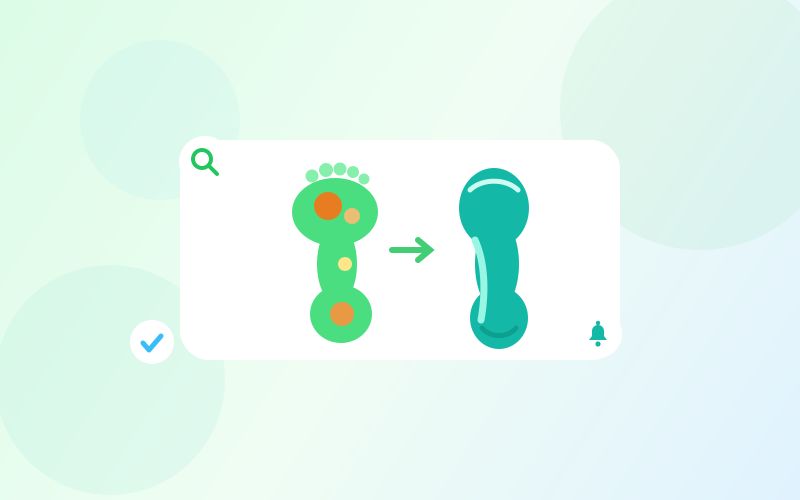
Orthotic insoles (foot orthoses) are devices made to be placed inside the shoe to support, correct or relieve the foot. Unlike over-the-counter comfort insoles, an orthotic is personalised, designed by a podiatrist after a podiatric assessment. The guiding idea is simple: the foot is the base of the whole body, and an imbalance there can affect the knee, hip or back.
An orthotic insole does not "repair" the foot: it changes how load is spread, to relieve pain and limit what might get worse.
Only a health professional can decide whether an orthotic is indicated.
When to consider a podiatric assessment
Pain that won't settle
The most common reason is foot pain — heel, arch, forefoot — especially with the first step in the morning or after exercise. Plantar fasciitis is a classic example. Pain can also sit higher up: an unexplained knee, hip or lower-back ache is sometimes linked to a foot imbalance.
Postural and static problems
Flat feet, high arches, uneven wear on one side of the shoes: these static problems warrant an opinion, in growing children as well as adults.
Sport and at-risk groups
Athletes load their feet intensely and often consult to prevent or treat overuse pain. Some situations call for particular vigilance. The diabetic foot is one: reduced sensation and poor circulation expose the person to wounds that go unnoticed, so podiatric follow-up is specific and regular, focused on prevention and coordinated with the doctor.
How the assessment unfolds
Static examination
Standing still, the patient is observed from every angle: ankle alignment, arch shape and weight distribution. A podoscope — a lit glass plate — reveals the loading and pressure zones.
Gait analysis
The foot does not only work at rest. Gait analysis follows the step from heel contact to toe-off, revealing excessive loads, compensations and asymmetries that a static position hides. This phase often explains pain that appears on exertion.
Custom manufacture
If an insole is indicated, it is built from the measurements taken — imprint, cast or scan. Materials and correction zones are chosen for the goal: supporting an arch, cushioning a heel, offloading a high-pressure area. The insole is then fitted and adjusted at follow-up visits.
Reason for consultation and possible role of the insole
The table below is indicative only and does not replace an individual assessment by the professional.
| Common reason | Possible role of the insole | |---|---| | Heel pain (plantar fasciitis type) | Cushion and offload the painful area | | Flat foot / collapsed arch | Support the arch and correct alignment | | Forefoot pain | Spread pressure across the forefoot | | Knee or back pain linked to loading | Rebalance load to limit compensations | | Diabetic foot | Prevent high-pressure and friction zones | | Intensive sport | Improve comfort and prevent overuse pain |
Renewal and follow-up
An orthotic is not permanent. It wears out, and above all the foot changes — growth, change of activity, weight variation, an evolving condition. A regular check confirms the correction still fits and decides on renewal, more often in children and at-risk situations like the diabetic foot.
For the professional, this relies on careful traceability: keeping successive assessments, loading measurements, the characteristics of the insoles made and the renewal dates. Practice-management software like Cabdivin helps structure this record, schedule check-ups and send renewal reminders, alongside the diary, patient-record features and reports. The aim is not more admin but a more reliable follow-up — a free 7-day trial, no credit card, at Cabdivin.
FAQ
Are orthotic insoles worn for life?
Not necessarily. Some situations need prolonged wear, others temporary support while pain settles or a problem corrects. The podiatrist decides at each review whether to continue, adjust or stop.
Can they go in any shoe?
They fit best in closed, supportive, deep-enough shoes; thinner models suit city or sports shoes. The podiatrist advises on the footwear compatible with the intended correction.
How long does it take to get used to them?
A gradual break-in is usual: wearing time is increased little by little over the first days. Persistent discomfort or new pain should be reported so the insole can be adjusted.
Where can I find a podiatrist?
Through your usual doctor or the Cabdivin directory to find a professional nearby. Only an in-person examination can confirm whether an orthotic is indicated.
Key takeaway
Orthotic insoles are personalised devices resulting from a podiatric assessment that combines a static examination, dynamic gait analysis and custom manufacture. Consider them for persistent foot pain like plantar fasciitis, loading-related knee or back pain, static problems, intensive sport, or an at-risk situation such as the diabetic foot, which requires specific follow-up. An insole is neither magic nor permanent: it is checked and renewed. For podiatrists, Cabdivin structures this follow-up — records, measurements, renewal reminders and reports — and centralises the practice diary. Free 7-day trial, no credit card: discover Cabdivin.
Sources
- Haute Autorité de Santé (HAS) — prévention du pied diabétique et orthèses plantaires
- Assurance Maladie (Ameli) — la pédicurie-podologie et sa prise en charge
- Organisation mondiale de la Santé (OMS) — diabète et prévention des complications du pied
- Ordre national des pédicures-podologues — champ de compétence et bilan podologique
Join the practitioners using AI daily
Cabdivin helps you manage your practice in minutes, not hours. Focus on your patients, not paperwork.
About the author
Équipe éditoriale Cabdivin
Équipe éditoriale Cabdivin
The Cabdivin team creates content to help healthcare professionals optimize their daily practice.
Manage your practice 5x faster with AI
Cabdivin automates your reports, billing and scheduling. Join practitioners saving time every day.
Try for freeFree for 7 days • No commitment
Categories
Newsletter
Get our practical tips and the latest news.