Osteoarthritis: symptoms, diagnosis and treatment
Équipe éditoriale Cabdivin
Équipe éditoriale Cabdivin
Osteoarthritis: understanding cartilage wear
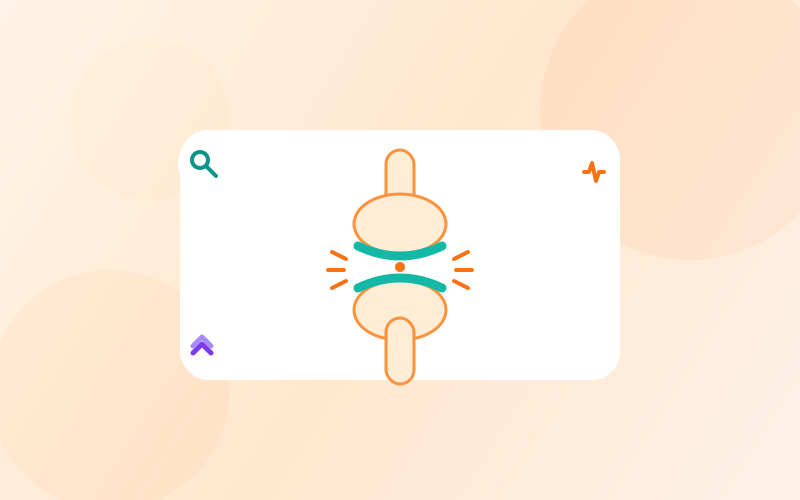
Osteoarthritis is the most common joint disease. It is the gradual breakdown of cartilage, the smooth tissue that caps the ends of bones and lets joints glide painlessly. As the cartilage thins, the bone surfaces rub more and the joint becomes stiff and painful. Contrary to a common belief, it is not simply unavoidable 'wear and tear' from ageing but a genuine disease of the whole joint — cartilage, the underlying bone and the surrounding membrane all take part.
Growing older does not mean living in pain: age is a factor, never a sentence.
The joint pain of osteoarthritis usually appears with movement and eases with rest, developing slowly over months or years, with calmer spells and more painful flare-ups.
Why cartilage breaks down
Cartilage acts as a shock absorber, spreading pressure and reducing friction. It has no blood supply or nerves, so it repairs poorly and osteoarthritis sets in silently, often before the first pain. Repeated mechanical stress (excess weight, heavy loads, some occupational or intense sporting movements), past injury, joint misalignment and a family tendency can all speed up wear. No single factor acts alone, and several are modifiable — which leaves real room to act.
Where osteoarthritis shows up
It can affect almost any joint. Knee osteoarthritis (gonarthrosis) is among the most common, causing pain when walking, on stairs or after sitting. Cervical (neck) osteoarthritis brings stiffness and neck pain, sometimes headaches, while lumbar osteoarthritis affects the lower back. The hip and the hands — especially the base of the thumb — are also frequently involved.
Osteoarthritis or arthritis: don't confuse them
The suffix -itis means inflammation: arthritis covers inflammatory joint diseases (such as rheumatoid arthritis) whose mechanism and management differ from osteoarthritis. A few simple clues help tell them apart, but only a professional can decide.
| Sign | Osteoarthritis | Arthritis (inflammatory) | |---|---|---| | Pain pattern | Mechanical: worse with use, eased by rest | Inflammatory: present at night and at rest | | Morning stiffness | Brief, clears after a few movements | Prolonged, can last half an hour or more | | Signs of inflammation | Joint little or not swollen | Swelling, warmth, sometimes redness | | Course | Slow, over years | Often in flares, sometimes faster |
Diagnosis: the role of the rheumatologist
Diagnosis rests first on listening and examination. The family doctor or rheumatologist analyses the type of pain, its timing and the limited movements, and examines the joint. An X-ray can confirm and assess the damage, though imaging findings do not always match the pain felt. Only a health professional can make the diagnosis and rule out other causes. Pain that wakes you at night, a warm swelling, fever or feeling generally unwell warrant a prompt visit.
Management: keep moving
There is no treatment that 'rebuilds' cartilage, but pain can be markedly reduced and function preserved. Adapted physical activity, regular and progressive, is now recommended first-line: complete rest worsens stiffness and wastes the muscles that protect the joint. Walking, cycling, swimming or gentle exercises are often well tolerated. Physiotherapy complements this with targeted strengthening and mobility work — this rehabilitation helps restore confidence and long-term independence. Depending on the impact, the doctor may add pain treatments, weight loss where useful, assistive aids, or, for advanced disabling forms, surgery (such as a joint replacement). These choices are always an individual medical decision.
Following change over time
Osteoarthritis is a long-term condition: pain and function fluctuate, and care is adjusted from that follow-up. Keeping a structured record — pain intensity, mobility, goals reached — lets the professional measure progress and adapt exercises. Practice-management software like Cabdivin centralises the patient record, calendar and appointment reminders and helps write reports; its features make change easier to track. For patients, the Cabdivin directory helps find a rheumatologist or physiotherapist nearby.
Key takeaway
Osteoarthritis is a common cartilage disease, distinct from inflammatory arthritis and far from an inevitable part of ageing. Recognising mechanical joint pain, knowing common sites like knee or cervical osteoarthritis, and seeing a rheumatologist when in doubt allow early action. Management relies above all on adapted physical activity and rehabilitation, with further options decided with the doctor. For health professionals, Cabdivin structures this long-term follow-up. Free 7-day trial, no credit card required: discover Cabdivin.
Sources
Join the practitioners using AI daily
Cabdivin helps you manage your practice in minutes, not hours. Focus on your patients, not paperwork.
About the author
Équipe éditoriale Cabdivin
Équipe éditoriale Cabdivin
The Cabdivin team creates content to help healthcare professionals optimize their daily practice.
Manage your practice 5x faster with AI
Cabdivin automates your reports, billing and scheduling. Join practitioners saving time every day.
Try for freeFree for 7 days • No commitment
Categories
Newsletter
Get our practical tips and the latest news.